

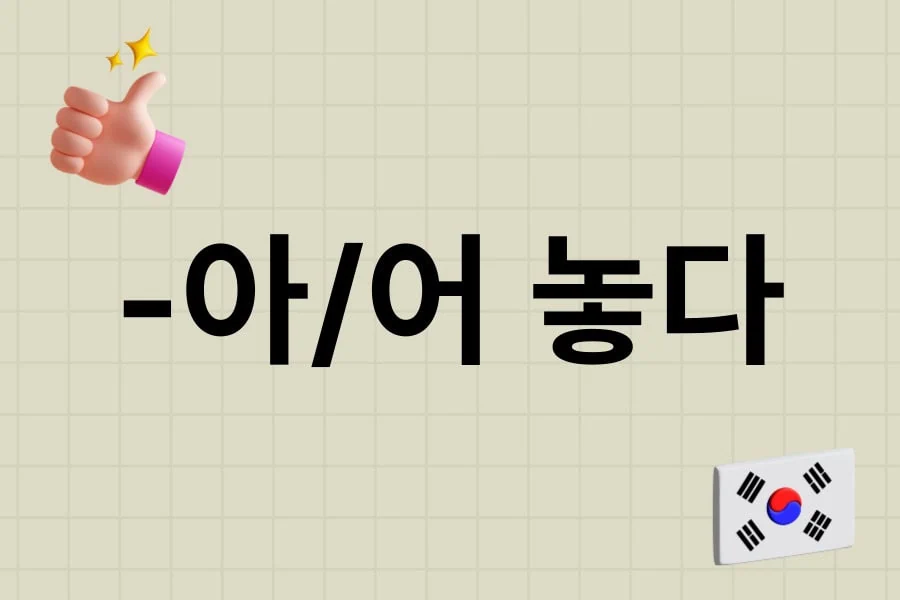
Introduction: Korean Grammar ‘-아/어 놓다’
Learning Korean grammar can be challenging, but breaking it down into manageable lessons can make it easier. Today, we will explore the grammar pattern ‘-아/어 놓다,’ which is used to indicate that an action has been completed and left in that state. This lesson will help you understand and use this form effectively.
Aprende coreano con la aplicación JAEM Korean: Mejora tu coreano con nuestra aplicación. a través de lecciones y cursos gratuitos. Y también, únase a nosotros Programa de desafío de 4 semanas Para progresar desde el nivel principiante avanzado hasta el nivel maestro con entrenadores nativos coreanos.
Programa de práctica de escritura con IA: Mejora tus habilidades de escritura con JAEM TOPIK, nuestro programa de práctica impulsado por IA. Obtén comentarios personalizados y consejos para el TOPIK que te ayudarán a mejorar tu escritura en coreano.
Nuestro libro: No te pierdas nuestra libro completo que abarca habilidades y estrategias esenciales del idioma coreano.
Saltar a:
Grammar Explanation: -아/어 놓다
The grammar pattern ‘-아/어 놓다’ is used to express that an action has been completed and the result is left as is, similar to “do something and leave it that way” in English. The ending depends on the vowel in the verb stem.
Formación:
- If the stem has a bright vowel (ㅏ or ㅗ), add ‘-아 놓다.’
- If the stem has a dark vowel (any other vowel), add ‘-어 놓다.’
- If the verb stem ends in 하다, it changes to 해 놓다.
| Verbo | Provenir | Forma | Ejemplo de oración |
|---|---|---|---|
| 열다 (to open) | 열 | 열어 놓다 | 문을 열어 놓았어요 (I opened the door and left it open) |
| 두다 (to place) | 두 | 두어 놓다 | 책을 책상 위에 두어 놓았어요 (I placed the book on the desk and left it there) |
| 하다 (hacer) | 하 | 해 놓다 | 일을 다 해 놓았어요 (I finished the work and left it done) |
Ejemplos
Ejemplos de verbos:
- 닫다 (to close)
- 닫아 놓다 = To close and leave it that way
- 창문을 닫아 놓았어요 = I closed the window and left it closed.
- 쓰다 (escribir)
- 써 놓다 = To write and leave it that way
- 편지를 써 놓았어요 = I wrote the letter and left it written.
- 만들다 (to make)
- 만들어 놓다 = To make and leave it that way
- 저녁을 만들어 놓았어요 = I made dinner and left it ready.
- 청소하다 (to clean)
- 청소해 놓다 = To clean and leave it that way
- 방을 청소해 놓았어요 = I cleaned the room and left it clean.
Ejemplos adicionales:
- 열다 (abrir)
- 열어 놓다 = To open and leave it that way
- 문을 열어 놓았어요 = I opened the door and left it open.
- 준비하다 (to prepare)
- 준비해 놓다 = To prepare and leave it that way
- 회의를 준비해 놓았어요 = I prepared the meeting and left it ready.
- 설거지하다 (to do the dishes)
- 설거지해 놓다 = To do the dishes and leave it that way
- 설거지를 다 해 놓았어요 = I did the dishes and left them clean.
- 저장하다 (to save/store)
- 저장해 놓다 = To save/store and leave it that way
- 파일을 저장해 놓았어요 = I saved the file and left it stored.
Uso en contexto
When using ‘-아/어 놓다’ in different contexts, it emphasizes that the action has been completed and the result is maintained.
Contextos cotidianos:
- 불을 켜 놓았어요 = I turned on the light and left it on.
- 옷을 준비해 놓았어요 = I prepared the clothes and left them ready.
- 컴퓨터를 켜 놓았어요 = I turned on the computer and left it on.
Special Occasions:
- 음식을 미리 만들어 놓았어요 = I prepared the food in advance and left it ready.
- 숙제를 다 해 놓았어요 = I finished my homework and left it done.
- 방을 미리 청소해 놓았어요 = I cleaned the room in advance and left it clean.
Perspectiva cultural: In Korean culture, using ‘-아/어 놓다’ emphasizes preparedness and forethought. It is often used to show that one has completed necessary actions in advance and left things in a state of readiness.
Errores comunes
Errores comunes:
- Incorrecto: 열어 놓았다 (Incorrect form of past tense)
- Correcto: 열어 놓았어요 = I opened it and left it open.
Explicación del error: Ensure that the correct form ‘-아/어 놓다’ is used with proper conjugation in context.
Puntos gramaticales relacionados
Explora estos puntos gramaticales relacionados para profundizar tu comprensión:
- -고 있다: To indicate ongoing actions.
- -아/어 두다: Similar to ‘-아/어 놓다,’ but with a nuance of keeping something in a certain state.
- -아/어 있다: To express a continuing state.
- -아/어 보다: To try doing something.
Ejercicios prácticos
¡La práctica hace al maestro!
- Ejercicio 1: Conjugate the following verbs with ‘-아/어 놓다.’
- 열다 (abrir)
- 쓰다 (escribir)
- 준비하다 (to prepare)
- 정리하다 (to organize)
Clave de respuestas:
- 열어 놓다
- 써 놓다
- 준비해 놓다
- 정리해 놓다
- Ejercicio 2: Create sentences using ‘-아/어 놓다’ for the following situations:
- I cleaned the room and left it clean.
- She wrote the notes and left them written.
- They prepared the presentation and left it ready.
- We turned off the lights and left them off.
Clave de respuestas:
- 방을 청소해 놓았어요.
- 그녀는 노트를 써 놓았어요.
- 그들은 발표를 준비해 놓았어요.
- 우리는 불을 꺼 놓았어요.
Descarga el libro de ejercicios para obtener más ejercicios y practicar.
Resumen y conclusión
Today, we covered the grammar point ‘-아/어 놓다’ and how to use it to express completed actions that are left in a certain state. This pattern is essential for conveying preparedness and maintaining results. Continue practicing with our workbook and check out related lessons for more in-depth learning.
Si tienes alguna pregunta o sugerencia, no dudes en comentar a continuación. ¡Feliz aprendizaje!
¡Aprende coreano auténtico con JAEM!
Aprende coreano con la aplicación JAEM Korean: Descubre la mejor manera de aprender coreano de verdad. con nuestra completa aplicación. Disfruta de una amplia variedad de lecciones y cursos gratuitos diseñados para ayudarte a dominar el idioma. Además, Nuestro exclusivo programa de desafío de 4 semanas Este programa te guía desde un nivel principiante avanzado hasta un nivel avanzado, todo bajo la tutela de profesores nativos de coreano. Tanto si estás empezando como si buscas perfeccionar tus habilidades, este programa te ofrece un camino eficaz hacia la fluidez.
Programa de práctica de escritura en coreano con IA: Lleva tu escritura coreana al siguiente nivel con JAEM TOPIK, nuestro innovador programa de práctica de escritura con IA.. Este servicio ofrece retroalimentación personalizada y consejos prácticos adaptados a tus necesidades de aprendizaje. Con el objetivo de mejorar tu escritura en coreano, JAEM TOPIK también ofrece estrategias específicas para obtener excelentes resultados en el examen TOPIK. Benefíciate de la experiencia y el asesoramiento personalizado para potenciar tu fluidez y confianza al escribir.
Nuestro libro: Además, explore nuestro libro completo Este recurso abarca habilidades y estrategias esenciales del idioma coreano. Complementa nuestra aplicación y programa de IA, ofreciendo un enfoque integral para dominar el coreano.
Respuestas