

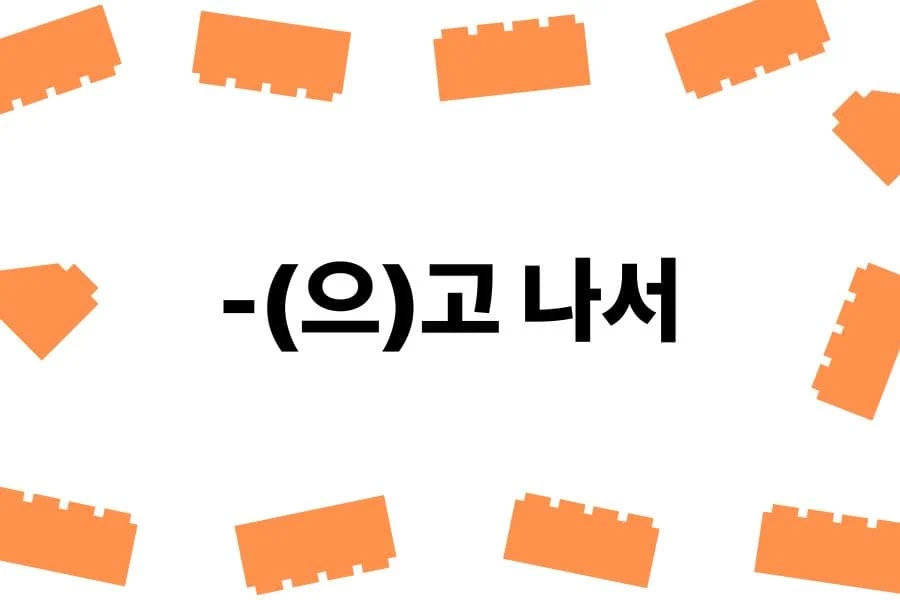
Introduction Korean Grammar ‘-(으)고 나서’
Learning Korean grammar can be challenging, but breaking it down into manageable lessons can make it easier. Today, we will explore the grammar pattern ‘-(으)고 나서,’ which is used to indicate actions that occur after another action in Korean. This lesson will help you understand and use this form effectively.
📝Aprende coreano con JAEM: Mejora tu coreano con nuestra aplicación. a través de lecciones y cursos gratuitos. Y también, únase a nosotros JAEM challenge program Para progresar desde el nivel principiante avanzado hasta el nivel experto con profesores nativos de coreano. ¡Empieza a estudiar coreano más!
✨Nuestro libro: No te pierdas nuestra libro completo que abarca habilidades y estrategias esenciales del idioma coreano. ¡Consulta nuestros libros y estudia con nosotros! 🙂
🚀Looking for practical Korean study tips and TOPIK strategies? Check out Blog de JAEM, where we share expert insights, vocabulary guides, and writing tips to help you succe
Saltar a:
Grammar Explanation
The grammar pattern ‘-(으)고 나서’ is used to indicate that one action happens after another action has been completed. It is similar to saying “after doing something” in English.
Formación:
- For verb stems ending in a consonant, add ‘-고 나서.’
- For verb stems ending in a vowel, add ‘-고 나서.’
| Forma de habla | Forma | Ejemplo de oración |
|---|---|---|
| Verbo (ir) | 가고 나서 | 학교에 가고 나서 (After going to school) |
| Verb (to eat) | 먹고 나서 | 밥을 먹고 나서 (After eating a meal) |
| Verb (to read) | 읽고 나서 | 책을 읽고 나서 (After reading a book) |
| Verb (to study) | 공부하고 나서 | 공부하고 나서 (After studying) |
Ejemplos
Indicating Actions with ‘-(으)고 나서’:
- 가다 (ir)
- 가고 나서 = After going
- 학교에 가고 나서 숙제를 해요 = I do my homework after going to school.
- 먹다 (comer)
- 먹고 나서 = After eating
- 밥을 먹고 나서 이를 닦아요 = I brush my teeth after eating a meal.
- 읽다 (para leer)
- 읽고 나서 = After reading
- 책을 읽고 나서 잠을 자요 = I sleep after reading a book.
- 공부하다 (estudiar)
- 공부하고 나서 = After studying
- 공부하고 나서 친구를 만나요 = I meet my friend after studying.
Usage in Context ‘-(으)고 나서’
When using ‘-(으)고 나서’ in different contexts, it emphasizes that one action is completed before another action begins.
Daily Activities:
- 아침을 먹고 나서 산책해요 = I take a walk after eating breakfast.
- 운동하고 나서 샤워해요 = I take a shower after exercising.
- 일을 끝내고 나서 쉬어요 = I rest after finishing work.
- 책을 읽고 나서 잠을 자요 = I sleep after reading a book.
Special Occasions:
- 영화를 보고 나서 커피를 마셔요 = I drink coffee after watching a movie.
- 파티에 다녀오고 나서 사진을 봐요 = I look at the pictures after coming back from the party.
- 저녁을 먹고 나서 산책할까요? = Shall we take a walk after dinner?
- 콘서트를 보고 나서 집에 갈 거예요 = I will go home after watching the concert.
Using Past Experiences:
- 한국에 가고 나서 한국어를 배웠어요 = I learned Korean after going to Korea.
- 대학에 들어가고 나서 많은 친구를 사귀었어요 = I made many friends after entering college.
- 결혼하고 나서 행복해졌어요 = I became happy after getting married.
- 여행하고 나서 사진을 정리했어요 = I organized the photos after traveling.
Perspectiva cultural: In Korean culture, specifying the sequence of actions using ‘-(으)고 나서’ helps provide clarity and context in conversations. It is commonly used in both daily activities and special occasions to convey the order in which actions occur.
Errores comunes
Errores comunes:
- Incorrecto: 가 나서 (missing the verb ending)
- Correcto: 가고 나서 = After going
- Incorrecto: 먹 나서 (missing the verb ending)
- Correcto: 먹고 나서 = After eating
Explicación del error: Ensure that the correct form ‘-고 나서’ is used to indicate actions that happen after another action.
Puntos gramaticales relacionados
Explora estos puntos gramaticales relacionados para profundizar tu comprensión:
- -기 전에: To express actions that happen before another action.
- -은/는 후에: To express “after” doing something.
- -고: To connect actions or states.
- -자마자: To express actions that happen immediately after another action.
Ejercicios prácticos
¡La práctica hace al maestro!
- Ejercicio 1: Conjugate the following verbs using ‘-(으)고 나서.’
- 가다 (ir)
- 먹다 (comer)
- 읽다 (para leer)
- 공부하다 (estudiar)
Clave de respuestas:
- 가고 나서
- 먹고 나서
- 읽고 나서
- 공부하고 나서
- Ejercicio 2: Create sentences using ‘-(으)고 나서’ for the following situations:
- After going to the mountain.
- After eating at this restaurant.
- After reading this book.
- After studying at the library.
Clave de respuestas:
- 산에 가고 나서.
- 이 식당에서 먹고 나서.
- 이 책을 읽고 나서.
- 도서관에서 공부하고 나서.
¡Aprende coreano auténtico con JAEM!
Aprende coreano con la aplicación JAEM Korean y el desafío JAEM: Descubre la mejor manera de aprender coreano de verdad. con nuestra completa aplicación. Disfruta de una amplia variedad de lecciones y cursos gratuitos diseñados para ayudarte a dominar el idioma. Además, nuestro exclusivo programa de desafío JAEM Este programa te guía desde un nivel principiante avanzado hasta un nivel avanzado, todo bajo la tutela de profesores nativos de coreano. Tanto si estás empezando como si buscas perfeccionar tus habilidades, este programa te ofrece un camino eficaz hacia la fluidez.
Nuestro libro: Además, explore nuestro libro completo Este recurso abarca habilidades y estrategias esenciales del idioma coreano. Complementa nuestra aplicación y programa de IA, ofreciendo un enfoque integral para dominar el coreano.
¡Domina el coreano con el blog de JAEM! ¿Buscas los mejores consejos para mejorar tu coreano? Blog de JAEM ¡Tenemos todo lo que necesitas! Desde estrategias para el TOPIK hasta consejos de vocabulario y escritura, te brindamos información experta para que estudies de forma más eficaz. ¡Mantente al día con contenido práctico y lleva tu aprendizaje de coreano al siguiente nivel! 🚀
If you want 1:1 Korean teacher, There is another service name “Capítulo coreano“






Respuestas