

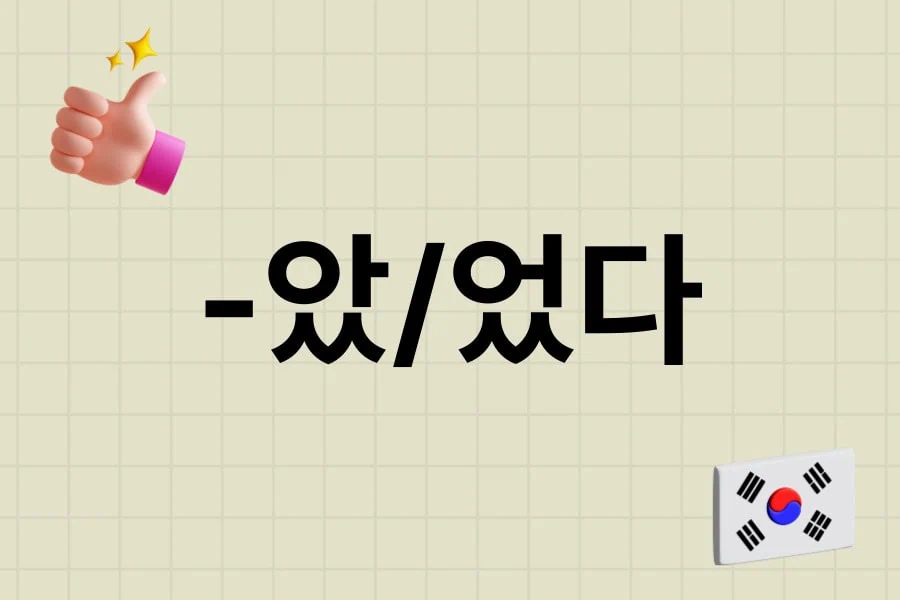
Introduction: Korean Grammar ‘-았/었다’
Learning Korean grammar can be challenging, but breaking it down into manageable lessons can make it easier. Today, we will explore the grammar pattern ‘-았/었다,’ which is used to express past tense in Korean. This lesson will help you understand and use this form effectively.
Aprende coreano con la aplicación JAEM Korean: Mejora tu coreano con nuestra aplicación. a través de lecciones y cursos gratuitos. Y también, únase a nosotros Programa de desafío de 4 semanas Para progresar desde el nivel principiante avanzado hasta el nivel maestro con entrenadores nativos coreanos.
Programa de práctica de escritura con IA: Mejora tus habilidades de escritura con JAEM TOPIK, nuestro programa de práctica impulsado por IA. Obtén comentarios personalizados y consejos para el TOPIK que te ayudarán a mejorar tu escritura en coreano.
Nuestro libro: No te pierdas nuestra libro completo que abarca habilidades y estrategias esenciales del idioma coreano.
Saltar a:
Explicación gramatical
The grammar pattern ‘-았/었다’ is used to express past tense in Korean, similar to the past tense in English. The ending depends on the vowel in the verb stem.
Formación:
- If the stem has a bright vowel (ㅏ or ㅗ), add ‘-았었다.’
- If the stem has a dark vowel (any other vowel), add ‘-었다.’
- If the verb stem ends in 하다, it changes to 했다.
| Verbo | Provenir | Forma | Ejemplo de oración |
|---|---|---|---|
| 가다 (ir) | 가 | 갔다 | 학교에 갔어요 (I went to school) |
| 먹다 (comer) | 먹 | 먹었다 | 밥을 먹었어요 (I ate a meal) |
| 하다 (hacer) | 하 | 했다 | 숙제를 했다 (I did my homework) |
Ejemplos
Ejemplos de verbos:
- 보다 (para ver)
- 보았다 = Saw
- 영화를 보았어요 = I watched a movie.
- 살다 (vivir)
- 살았다 = Lived
- 서울에서 살았어요 = I lived in Seoul.
- 읽다 (para leer)
- 읽었다 = Read
- 책을 읽었어요 = I read a book.
- 마시다 (beber)
- 마셨다 = Drank
- 물을 마셨아요 = I drank water.
Ejemplos de adjetivos:
- 크다 (grande)
- 컸다 = Was big
- 그 집은 컸어요 = That house was big.
- 작다 (pequeño)
- 작았다 = Was small
- 고양이가 작았어요 = The cat was small.
- 좋다 (bien)
- 좋았다 = Was good
- 날씨가 좋았어요 = The weather was good.
- 나쁘다 (malo)
- 나빴다 = Was bad
- 기분이 나빴어요 = I felt bad.
Uso en contexto
When using ‘-았/었다’ in different contexts, it emphasizes that the action or state occurred in the past.
Contextos cotidianos:
- 어제 뭐 했어요? = What did you do yesterday?
- 친구를 만났어요 = I met a friend.
- 주말에 여행을 갔어요 = I went on a trip over the weekend.
- 점심을 먹었어요 = I ate lunch.
Special Occasions:
- 지난 생일에 파티를 열었어요 = I threw a party on my last birthday.
- 휴가 때 바다에 갔어요 = I went to the beach during my vacation.
- 결혼식에 참석했어요 = I attended a wedding.
Perspectiva cultural: In Korean culture, using the past tense to describe actions or states is essential for clear communication. It helps to indicate that something has already occurred, distinguishing it from present and future events.
Errores comunes
Errores comunes:
- Incorrecto: 먹었다 (Correct form, but ensure context is clear)
- Correcto: 밥을 먹었다 = I ate a meal.
Explicación del error: Ensure that the correct form ‘-았/었다’ is used with proper context and particles to convey clear meaning.
Puntos gramaticales relacionados
Explora estos puntos gramaticales relacionados para profundizar tu comprensión:
- -고 있었다: To express past continuous actions.
- -던: To indicate past habitual actions or incomplete past actions.
- -았/었을 때: To indicate the time when something happened in the past.
- -았/었더니: To indicate a past action and its result or reaction.
Ejercicios prácticos
¡La práctica hace al maestro!
- Ejercicio 1: Conjugate the following verbs in the past tense using ‘-았/었다.’
- 가다 (ir)
- 먹다 (comer)
- 하다 (hacer)
- 보다 (para ver)
Clave de respuestas:
- 갔다
- 먹었다
- 했다
- 보았다
- Ejercicio 2: Create sentences using ‘-았/었다’ for the following situations:
- I watched a movie.
- She lived in Busan.
- They read a book.
- We drank coffee.
Clave de respuestas:
- 영화를 보았어요.
- 그녀는 부산에서 살았어요.
- 그들은 책을 읽었어요.
- 우리는 커피를 마셨어요.
Descarga el libro de ejercicios para obtener más ejercicios y practicar.
Resumen y conclusión
Today, we covered the grammar point ‘-았/었다’ and how to use it to express past tense in Korean. This pattern is essential for conveying actions and states that occurred in the past. Continue practicing with our workbook and check out related lessons for more in-depth learning.
Si tienes alguna pregunta o sugerencia, no dudes en comentar a continuación. ¡Feliz aprendizaje!
¡Aprende coreano auténtico con JAEM!
Aprende coreano con la aplicación JAEM Korean: Descubre la mejor manera de aprender coreano de verdad. con nuestra completa aplicación. Disfruta de una amplia variedad de lecciones y cursos gratuitos diseñados para ayudarte a dominar el idioma. Además, Nuestro exclusivo programa de desafío de 4 semanas Este programa te guía desde un nivel principiante avanzado hasta un nivel avanzado, todo bajo la tutela de profesores nativos de coreano. Tanto si estás empezando como si buscas perfeccionar tus habilidades, este programa te ofrece un camino eficaz hacia la fluidez.
Programa de práctica de escritura en coreano con IA: Lleva tu escritura coreana al siguiente nivel con JAEM TOPIK, nuestro innovador programa de práctica de escritura con IA.. Este servicio ofrece retroalimentación personalizada y consejos prácticos adaptados a tus necesidades de aprendizaje. Con el objetivo de mejorar tu escritura en coreano, JAEM TOPIK también ofrece estrategias específicas para obtener excelentes resultados en el examen TOPIK. Benefíciate de la experiencia y el asesoramiento personalizado para potenciar tu fluidez y confianza al escribir.
Nuestro libro: Además, explore nuestro libro completo Este recurso abarca habilidades y estrategias esenciales del idioma coreano. Complementa nuestra aplicación y programa de IA, ofreciendo un enfoque integral para dominar el coreano.

Respuestas